Agent assist is transforming the way customer service teams work. But what exactly is ¿qué es la asistencia de agente?? Rather than replacing human agents, this technology provides them with real-time support, information, and guidance, enabling them to focus on what they do best: solving problems and building strong customer relationships. With this approach, businesses can see customer loyalty enhanced by AI, creating more satisfying and efficient experiences for every client interaction.
Understanding what is agent assist requires looking at the broader role of technology in customer service. By leveraging advanced technology tools that improve workflow efficiency, organizations can automate routine tasks while giving agents the intelligence they need to handle complex inquiries. Similarly, cutting-edge computational solutions for processing large datasets quickly allow teams to anticipate customer needs and respond faster than ever.
Integrating AI-driven support also benefits marketing strategies. Learning from effective online marketing strategies for improving customer engagement helps companies craft personalized experiences, while comprehensive digital marketing techniques that boost lead conversion demonstrate how agent assist can be paired with marketing insights to strengthen customer relationships.
Financial decision-making becomes more precise when AI insights are applied. By using innovative finance resources for smarter business planning, companies can combine predictive analytics with agent assist capabilities to identify trends, forecast demand, and enhance overall financial performance. In this way, what is agent assist is not just a tool for customer support—it is a transformative approach that connects technology, marketing, and finance to create more meaningful, efficient, and loyalty-driven interactions.
Top 10 Agent Assist Software Solutions
When exploring what is agent assist technology, it’s important to compare the leading solutions that can enhance customer service efficiency, agent performance, and overall customer satisfaction. Here’s a list of the top 10 tools transforming contact centers today.
1. Bright Pattern
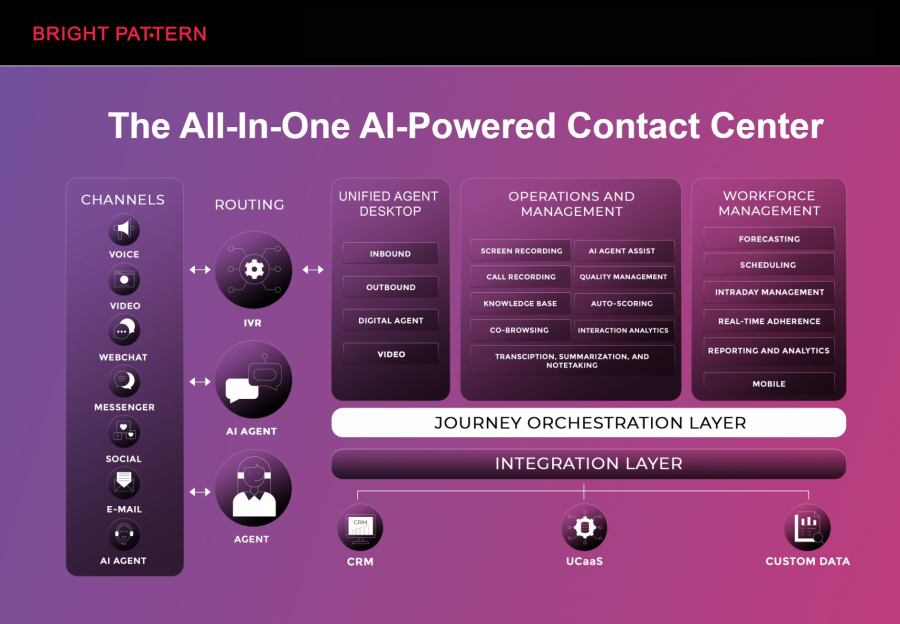
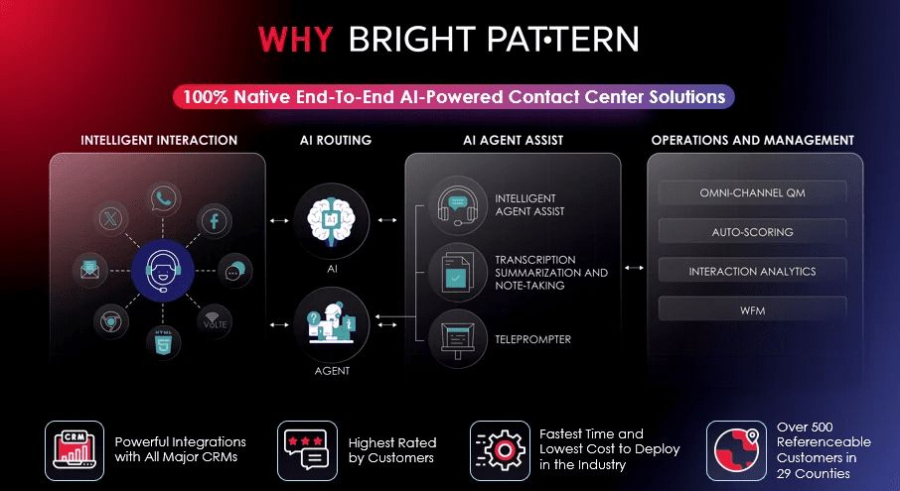
Bright Pattern is a leading platform for agent assist, providing AI-driven guidance to customer service agents in real time. By offering contextual information, suggested responses, and automated workflows, Bright Pattern allows agents to focus on resolving customer issues efficiently while building stronger relationships.
Key features of Bright Pattern include:
- Real-time AI suggestions during live interactions
- Omnichannel support across voice, chat, email, and social media
- Integrated analytics for measuring agent performance and customer satisfaction
- Workflow automation to reduce repetitive tasks
- Easy integration with CRM and business systems
By understanding what is agent assist through Bright Pattern, organizations can significantly improve both agent productivity and customer loyalty, making it a top choice for modern contact centers.
2. Genesys Cloud CX
Genesys Cloud CX provides AI-powered agent assist to streamline workflows and deliver personalized customer experiences across multiple channels.
3. Five9
Five9 offers intelligent virtual assistants and real-time agent guidance to optimize call center operations and improve first-call resolution rates.
4. NICE inContact CXone
NICE inContact CXone uses AI and automation to provide agents with suggested responses and insights, helping reduce handling times and improve customer satisfaction.
5. Talkdesk CX Cloud
Talkdesk CX Cloud delivers AI recommendations during customer interactions and automates repetitive tasks, enabling agents to focus on complex queries.
6. Zendesk Sunshine
Zendesk Sunshine combines AI tools with customer data to give agents contextual guidance, improving response times and enhancing the overall customer experience.
7. Salesforce Service Cloud
Salesforce Service Cloud’s AI-driven agent assist provides recommendations and knowledge base suggestions, helping agents resolve issues faster and more accurately.
8. HubSpot Service Hub
HubSpot Service Hub includes AI-powered conversation insights and automated workflows that enhance agent efficiency and customer satisfaction.
9. LivePerson
LivePerson’s agent assist features include predictive responses and AI coaching, allowing agents to deliver more accurate and personalized support.
10. Freshdesk
Freshdesk uses AI suggestions and workflow automation to help agents handle tickets more efficiently while maintaining high-quality customer interactions.
What Is Agent Assist?
Agent assist(sometimes calledagent assistanceorAI-assisted service) is technology that supports contact centre agents during customer interactions. It listens to, observes or analyses the conversation and then provides helpful prompts, suggested answers, knowledge articles and next best actions in real time.
In simple terms, agent assist is like having an expert coach sitting next to every agent, quietly feeding them the information they need, exactly when they need it.
Core characteristics of agent assist
- Real-time guidanceduring live calls, chats or emails.
- AI-powered recommendationsbased on what the customer is saying or typing.
- Automatic knowledge lookupso agents do not have to search multiple systems.
- Compliance and quality promptsthat remind agents of key phrases or steps.
- Coaching and feedbackthat help agents improve over time.
Unlike a standalone chatbot, agent assist is designed to workwithpeople, not instead of them. The agent always stays in control and chooses which suggestions to use.
How Does Agent Assist Work?
Agent assist tools combine several technologies to understand conversations and offer useful help in the moment. While implementations differ, most solutions follow a similar pattern.
1. Understanding the customer interaction
- Speech recognitionconverts spoken words into text during phone calls.
- Natural language processing(NLP) analyses what the customer is saying or typing to identify intent, key topics and sentiment.
- Context awarenesslooks at previous interactions, customer history and case details.
By combining these signals, the system builds a live picture of what the customer needs.
2. Finding the best response or action
- Knowledge searchscans FAQs, knowledge bases and documentation for relevant answers.
- Process logicchecks business rules, policies and workflows to propose the right next steps.
- Machine learninguses past successful interactions to improve which suggestions are shown first.
The goal is to surface the most helpful, accurate information in a format that is easy for the agent to use.
3. Delivering real-time support to the agent
Recommendations are presented directly inside the agent desktop, such as the CRM or contact centre interface. Common types of support include:
- Suggested repliesthe agent can personalise and send.
- Knowledge snippetssummarised answers pulled from longer articles.
- Dynamic scriptsthat adapt based on the customer’s responses.
- Guided workflowsthat walk the agent through complex processes step by step.
- Prompts and remindersto ask mandatory questions or give required disclaimers.
Throughout the interaction, agents stay in control. They can accept, edit or ignore suggestions, ensuring that every response still feels human and authentic.
The Key Benefits of Agent Assist
When implemented well, agent assist delivers benefits across the whole operation: agents, customers and the wider business.
1. Faster handling times without sacrificing quality
Because the system finds answers automatically, agents spend less time searching knowledge bases or putting customers on hold. This typically leads to:
- Reduced average handling time, as agents can resolve queries more quickly.
- Fewer transfers and escalations, because frontline staff have better information at their fingertips.
- Higher first contact resolution, with more issues fixed in a single interaction.
2. More confident, capable agents
Agent assist acts as a safety net, especially for newer team members. It means:
- Shorter ramp-up timesfor new hires, as they get real-time guidance instead of relying solely on classroom training.
- Less pressure and stress, because agents do not have to memorise every process or policy.
- Continuous learningas agents see best-practice responses in context during real conversations.
Over time, this builds a more skilled, confident team, with fewer errors and a more consistent standard of service.
3. Better, more consistent customer experiences
From the customer’s perspective, agent assist typically results in:
- Quicker answersand less time on hold.
- More accurate information, aligned with the latest policies and product details.
- A smoother journey, as agents follow the right steps in the right order.
- A more personal touchwhen agents can focus on listening, empathy and reassurance rather than hunting for information.
4. Stronger compliance and reduced risk
In regulated sectors such as financial services, utilities and healthcare, missing a required disclaimer or question can be costly. Agent assist helps by:
- Highlighting mandatory scriptsat the right moment in the conversation.
- Prompting agentsto capture specific data or offer required options.
- Standardising responsesso all customers receive information aligned with current regulations.
This not only reduces risk, it also boosts customer trust by ensuring a clear, consistent experience.
5. Better insights from every interaction
Because agent assist tools analyse live conversations, they generate rich data on what customers actually ask and how issues are resolved. This can be used to:
- Spot emerging problemswith products or services earlier.
- Refine knowledge basesbased on the answers agents use most.
- Improve training programmesby identifying common skill gaps.
- Inform product, pricing and policy decisionswith real customer feedback.
Common Agent Assist Use Cases
Agent assist can add value in almost any customer service environment. Here are some popular scenarios.
Technical support and troubleshooting
When customers call with technical issues, they often describe complex symptoms in non-technical language. Agent assist can:
- Translate the customer’s description into likely technical causes.
- Surface step-by-step troubleshooting guides.
- Suggest clarifying questions to pinpoint the issue.
- Offer recommended fixes based on similar past cases.
Billing and account enquiries
Billing questions can be emotionally charged and time-consuming. Agent assist supports agents by:
- Pulling in relevant account details and recent invoices.
- Highlighting applicable policies, discounts or payment options.
- Providing clear, plain-language explanations of charges.
Sales and retention conversations
In sales or retention contexts, timing and relevance are crucial. Agent assist can:
- Recommend suitable products or plans based on customer needs.
- Surface personalised offers, incentives or upgrades.
- Prompt agents with benefit-focused talking points.
- Flag churn risk signals and suggest save strategies.
Agent Assist vs Chatbots and Full Automation
It is easy to confuse agent assist with other AI solutions. The table below highlights key differences.
|
Aspect |
Agent Assist |
Chatbot / Full Automation |
|
Who talks to the customer? |
Human agent, guided by AI. |
AI interacts directly, sometimes with no agent involved. |
|
Primary goal |
Make agents more effective and efficient. |
Automate interactions end to end where possible. |
|
Control |
Agent chooses whether to use suggestions. |
AI controls the conversation until escalation. |
|
Typical use |
Complex or high-value interactions. |
Simple, repetitive queries and self-service. |
|
Customer experience |
Human-led, with AI support. |
AI-led, with human backup when needed. |
In practice, many organisations usebothapproaches. Chatbots handle straightforward tasks, while agent assist equips human teams to deliver outstanding service on more complex or sensitive issues.
Key Features to Look for in an Agent Assist Solution
Not all agent assist tools are the same. When you evaluate options, consider the following features and capabilities.
- Real-time performance– Suggestions should appear quickly enough to be genuinely useful during a live interaction.
- Accurate understanding– Strong speech recognition and language understanding are essential for reliable guidance.
- Easy integration– The tool should work smoothly with your existing telephony, CRM and knowledge systems.
- Intuitive interface– Agents should be able to see and act on recommendations without distraction.
- Customisable content– You should be able to add and update scripts, workflows and knowledge easily.
- Security and privacy controls– Robust protections for customer data, especially in regulated sectors.
- Analytics and reporting– Clear insight into how the system affects performance, quality and customer outcomes.
Implementing Agent Assist in Your Contact Centre
A thoughtful rollout is crucial to achieving strong, sustainable results. These steps help ensure success.
1. Start with clear objectives
Decide what outcomes matter most to your organisation. For example:
- Reducing average handling time.
- Improving first contact resolution.
- Raising customer satisfaction scores.
- Speeding up new-hire onboarding.
- Strengthening compliance performance.
Clear goals will influence how you configure the system and which use cases you prioritise.
2. Involve agents early
Agent buy-in is vital. Involving frontline staff in design and testing helps to:
- Ensure recommendations are genuinely useful in real conversations.
- Reduce anxiety about AI by positioning it as support, not surveillance.
- Identify potential friction points in the agent desktop.
3. Start with a focused pilot
Many organisations begin with a pilot in a single team, queue or channel. This approach lets you:
- Test how well the AI understands your specific customers and terminology.
- Fine-tune prompts, scripts and workflows.
- Measure early impact on KPIs before wider rollout.
4. Train and support your teams
Even though agent assist simplifies the job, training still matters. Effective programmes cover:
- How and when to use suggestions.
- Balancing guidance with natural conversation.
- Feeding back on inaccurate or unhelpful prompts.
Continual support and open feedback channels encourage agents to embrace the tool and help it improve.
Measuring the Impact of Agent Assist
To understand the value of agent assist, track performance before and after implementation. Useful metrics include:
- Operational metricssuch as average handling time, first contact resolution and transfer rates.
- Quality metricsincluding quality assurance scores and error rates.
- Customer metricssuch as customer satisfaction, Net Promoter Score and customer effort.
- People metricslike agent satisfaction, attrition and time to proficiency for new hires.
Qualitative feedback also matters. Comments from customers and agents often highlight benefits that are not immediately visible in the numbers, such as greater confidence, smoother calls and clearer explanations.
The Future of Agent Assist
Agent assist technology is evolving quickly. As AI capabilities improve, expect to see:
- More natural language understandingthat copes better with accents, slang and noisy environments.
- Richer personalisationbased on customer preferences, history and real-time behaviour.
- Proactive recommendationsthat anticipate needs before the customer articulates them.
- Tighter integrationwith back-office systems to automate routine updates and checks.
Importantly, the human role in service remains central. As routine tasks become easier and better supported, agents can dedicate more time and attention to complex, emotional and high-value interactions – the moments where people still prefer to speak to another person.
Conclusion: Agent Assist as a Competitive Advantage
Agent assist is far more than a new gadget for the contact centre. It is a strategic way to combine the strengths of human empathy and AI intelligence, creating experiences that are faster, clearer and more reassuring for customers.
By giving agents real-time guidance, reducing cognitive load and ensuring consistent quality, organisations can raise performance across the board. The result is a service operation that is more efficient, more resilient and better equipped to meet rising customer expectations.
For any organisation serious about customer experience, agent assist is becoming a powerful and increasingly essential part of the toolkit.
